

What’s The Best Coffee For Plunger?
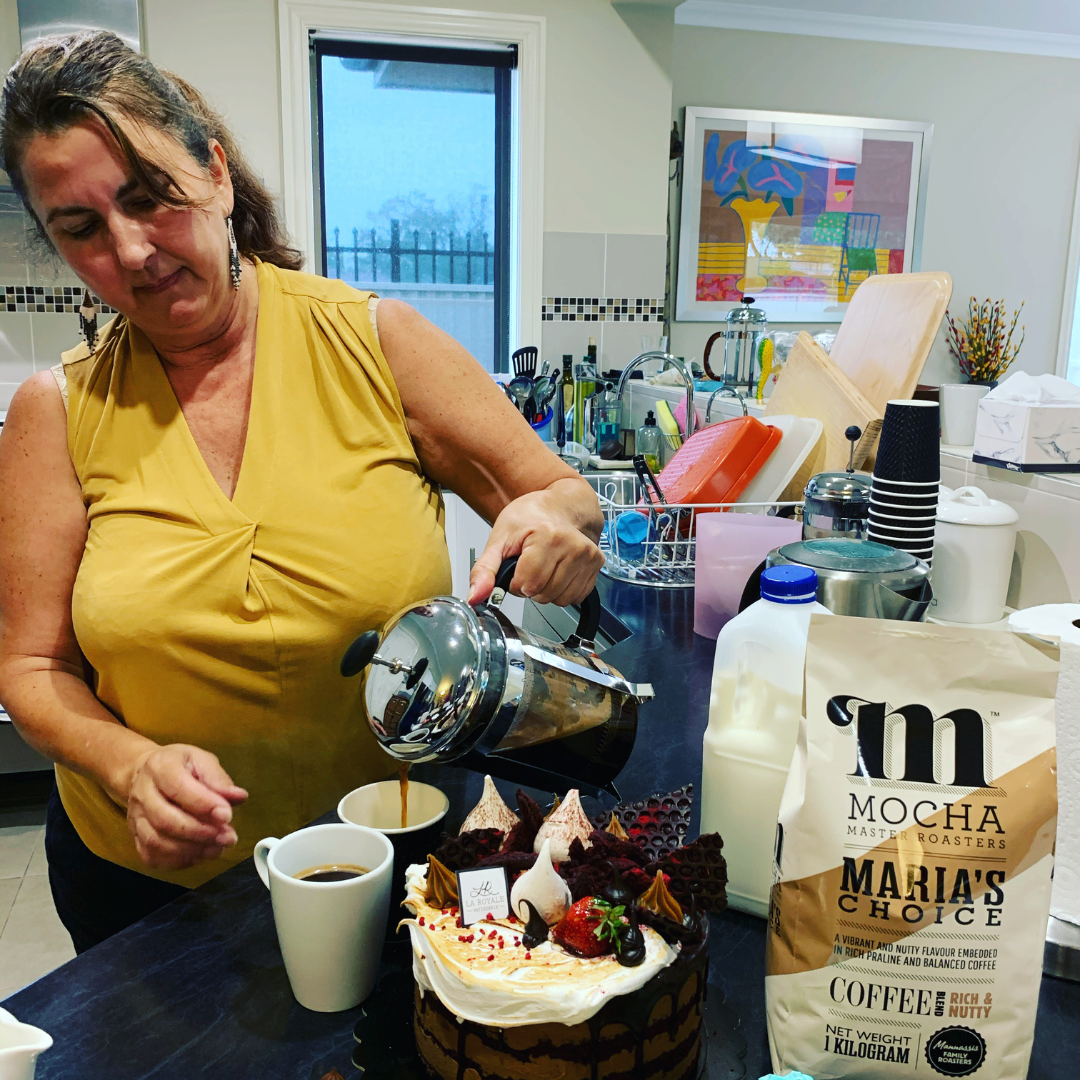
I’m often asked what’s the best coffee for plunger? It’s a tough question as coffee is so subjective. In this blog I’ll help you understand the various coffee flavours and what influences them. From there you will be able to pick particular flavours you like. But firstly we’ll explain how coffee is extracted through a plunger and the flavour it produces. I’ve also answered your 6 questions you want to ask me, including washup.
Table of Contents
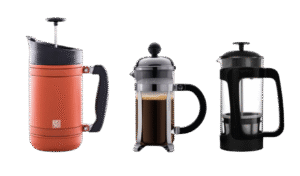 Various types of plunger models
What is a French press?
The French press is glass beaker that’s been aesthetically designed for making coffee and consists of:-
- The glass beaker with the handle attached
- The lid with the wire mesh filter attached to the plunge rod
How does it work?
Brewing in a French press relies on water just off the boil (approx. 96°C) poured onto coarse coffee grounds. The ground coffee is steeped for 4 minutes extracting body, aroma and all the essential flavour components. The coffee grains are separated via the plunge rod/filter mesh. The finished brew has ground coffee sitting at the bottom of the beaker and the hot coffee is now ready to pour.
What does plunger coffee taste like?
Plunger coffee tastes very rich and rounded with a slightly earthy sediment texture. It’s acidity is somewhat lower because the extraction is slow and not subject to pressure. It’s strong but not as intense as an espresso.
Our family has been enjoying plunger coffee for over 40 years. It’s quick, simple, no fuss and consistent. We often have customers that own coffee machines come in asking for the best coffee for plunger. We know that they’re entertaining at home that weekend and couldn’t be bothered with all the fuss of using the espresso machine. How true.
What do I need to know?
The key for a stand out plunger coffee lies in the coffee’s flavour profile which is influenced by the growing region, coffee species and roast level. A good flavour profile is one that is well rounded, has good body, acidity, complexity and a lengthy textured finish. The actual flavour whether it be fruity, chocolatey, nutty, earthy or a combination of these is very subjective. You want a coffee that has good depth of flavour and leaves a nice mouthfeel.
Growing Region / Coffee Species
As a general rule coffees that are more livelier come up good in French Press. The liveliness comes from the acidity, which is subject to the type of coffee species (arabica or robusta), where the coffee was grown (Country of origin), and the roast development of the coffee.
- Arabica coffees grown in central and south America along with arabica coffees from Africa are very aromatic, sweet and have good acidity which brings length and depth of flavour.
- Robusta coffees grown in South & Southeast Asia along with robusta coffees from Central and Western Sub-Saharan Africa are very earthy and low in acidity with a strong full body.
Roast Level
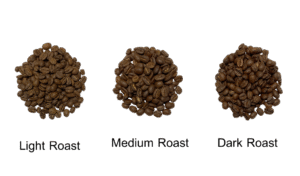
Coffee roast level chart
The roasting process can enhance or lower the acidity, hence influence the coffee taste. Coffees that are a light to medium roast have more acidity and mouthfeel and tend to be more suitable in a plunger. However, regarding the lighter roasts, they must be roasted into the ‘sweet spot’ otherwise they can taste quite tart.
In saying that, we have clients that still prefer full bodied bold and earthy coffees that are somewhat darker roasted for their plunger. This brings us back to the subjectivity of coffee. Let’s face it, it’s personal and you’re the one in charge.
Picking your preferred coffee flavour
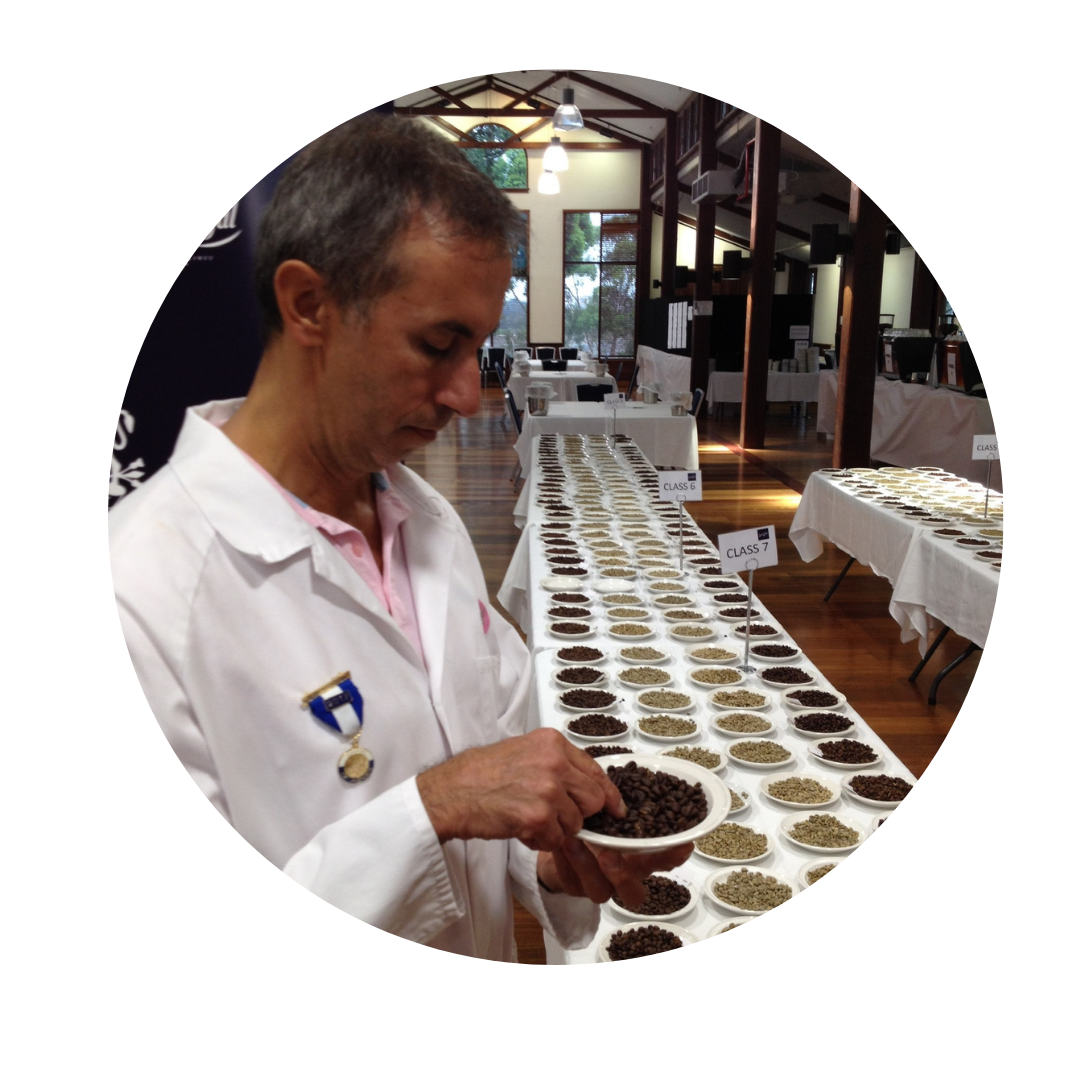
I have been Judging and Critiquing coffees for 4 decades. Although you can find an endless amount of flavour descriptors for coffee, I believe in keeping it simple and have categorised them in 3 main flavour groups – Nutty, Fruity/Wine-like and Chocolatey/Earthy.
Coffee flavours
- Nutty – Arabica coffees predominately grown in Central and South America. Eg; Colombian, Brazil, Guatemalan.
- Fruity/Wine-like – Arabica coffees predominantly grown in Africa. Eg; Ethiopian Tanzanian, Kenyan.
- Chocolatey/Earthy – Arabica and Robusta coffees predominantly grown in Asia but include Brazilian, Honduran and Indian coffees.
Are single origins good for plunger?
Yes, of course. The beauty of a single origin is that you get to taste the pure flavour characteristic of the origin. The slight downfall is that they can be one dimensional. But I personally love our Colombian in a plunger.
A few of our favourites are:-

Colombian coffee beans
- Colombian organic ‘Tolima farms’- “FRUITY CARAMEL”, Sweet and fruity with a dry nutty texture.
- Ethiopian – “TUTTI FRUITY”, very aromatic, zesty tangerine & grape like flavours are complimented in a drier wine – like tannin finish.
- Guatemalan ‘Antigua’ – “BUTTERSCOTCH”, sweet brown sugar, great body and depth of flavour.
- Indian ‘Pearl Mountain’ – “CHOC MALT”, smooth malty chocolate. This coffee is well rounded and low in acidity with good body.
- Honduran organic – “CHOCKY WALNUT” yes please. If you’re after a no fuss good smooth round flavour. Then, this is the one.
Are blends good for plunger coffee (French press)?
Coffee blends are great in a French press as they consist of a variety of different single origin coffees which produce a more rich complex flavour. As with any recipe you aim to introduce contrasting flavours that compliment each other and produce a multidimensional complex coffee with good body and depth of flavour. A bit like enjoying a fruit and nut chocolate bar ( 3 flavours in 1). Our family’s favourite blend is Maria’s Choice. But in saying that, I still often enjoy our ‘Smooth Espresso’ in a plunger.
Our favourite plunger blends are:-
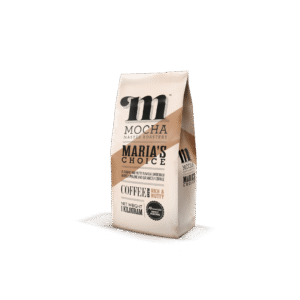
Maria’s Choice plunger blend
- Maria’s Choice – RICH & NUTTY, our family always serves up Maria’s Choice in a plunger. We love it! A blend of Colombian, Guatemalan and Brazilian arabica coffees. It’s the best complete coffee blend for plunger. There’s body, complexity, sweet acidity, good mouthfeel and a nice dry lengthy nutty finish.
- The Original – TOFFEE & FRUIT, arabica coffees from Guatemalan Antigua are blended with two differently processed coffees from Ethiopia that bring great complexity. There’s endless layers of flavour that satisfy to the last drop. Sweet caramelly coffee with a TANGY liveliness that comes from the Ethiopian coffees.
- Smooth Espresso – MALT & CREAM, Brazilian coffee from the Cerrado region is combined with rich Chocolatey Honduran and malty Indian coffee. A perfect combination for those who enjoy a smoother coffee but want it to taste like coffee.
If you still need help call us (02) 95655227 and we’ll guide you through, or you can pop in and visit us. We’re situated in Marrickville at Unit 5, 13-21 Cadogan Street – Mocha Master Roasters. There’s onsite parking.
6 Q & A’s to making the best coffee for French press.
[/vc_column_text][/vc_column]
How much coffee should I use in a plunger?
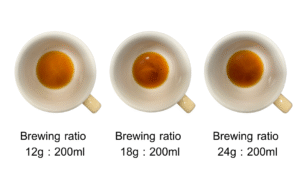
When you prepare plunger coffee you want to consistently use approximately 6g of coffee to every 100ml. Below are our recommended ratios of coffee to water corresponding to the various sized plungers.
Plunger Coffee : Water Ratio
| Plunger size (Cup) | Coffee weight (g) | Water volume (ml) |
| 3 | 12g | 200ml |
| 4 | 30g | 500ml |
| 6 | 45g | 750ml |
| 8 | 60g | 1000ml |
| 12 | 90g | 1500ml |
How long should I brew the coffee for plunger?
Brew between 3 – 4 minutes.
What grind size should I use in my French Press?
Quite coarse very similar to coarse salt. Ensure your grinder burrs are fairly new. Fairly worn blades produce an inconsistent particle size, hence more fine particles will be mixed into the ground coffee. This increase the sediment but also affects the flavour and can make pressing the plunge rod difficult.
What is the ideal water temperature for plunger coffee?
96 deg or let the water sit for 10 seconds off the boil before pouring onto coffee grounds.
How do I avoid sludge or sediment in my cup?
As explained earlier, sediment is part of the nature of the plunger. So, you’ll never eliminate all the sediment. I actually enjoy it as it adds body in the cup.
By using a coarsely ground coffee and ensuring the grinding burrs are fairly new.
Check the plunger’s mesh has no cut up holes.
Avoid mixing the coffee just before you plunge it.
How do I clean a French press?
Dismantle the filter mesh, guide and plunge rod and sponge clean all components and glass beaker with warm mild neutral soapy water.
No Comments